Stand in the lobby of a bank branch on Jail Road at 11 a.m. and you will see the oldest problem in customer service: forty people, four counters, and no idea who is next. Deploying a modern queue management system in lahore has quietly become one of the highest-return technology purchases a service business can make, and in 2026 it is spreading from banks into hospitals, telecom franchises, government facilitation centers, and even vehicle registration offices across the city.
The reason is simple economics. Research on service operations consistently shows that perceived waiting time, not actual waiting time, decides whether a customer walks out or comes back. A token, a screen, and a calm seat change that perception completely. This buyer’s guide explains the components, the deployment models, and the mistakes Lahore businesses keep making so you can skip them.
The Real Cost of a Disorderly Lobby
Every walkout is lost revenue, but the hidden losses are worse. Staff at open counters face constant interruption from people asking whose turn it is. Managers cannot measure service time because nothing is recorded. Complaints become shouting matches because there is no evidence of who arrived when.
Branches that install ticketing report a different atmosphere within days. Customers sit instead of crowding the counter. Tellers finish each transaction without three people leaning over it. And for the first time, the manager gets a report showing exactly how long each service takes.
How Does a Queue Management System Actually Work?
The mechanics are straightforward, and understanding them helps you buy the right size of system.
- A customer arrives and takes a token from a kiosk, selecting the service they need, such as cash deposit, account opening, or bill payment.
- The system places that token in the correct virtual line based on service type and priority rules.
- Wall displays and voice announcements call the token to a specific counter when an agent becomes free.
- The agent closes the transaction with one key press, and the software logs wait time and service time automatically.
- Management dashboards aggregate the data into daily, weekly, and branch-versus-branch reports.
Priority and multi-service routing
Good systems let you fast-track senior citizens, premium account holders, or single-document tasks. This routing logic is where cheap token dispensers and true queue platforms part ways.
The data layer is the real purchase
Once tokens flow through software, patterns surface that no floor manager could see. One Gulberg telecom franchise discovered that SIM replacement took nine minutes on average while bill payment took ninety seconds, so it split the counters accordingly and cut peak wait times by a third without hiring anyone. That single scheduling change paid for the entire installation within months.
Which Type of Queue Management System in Lahore Fits Your Business?
Vendors offer three broad tiers. Match the tier to your daily footfall rather than buying the biggest demo you were shown.
| Feature | Basic Token Dispenser | Full Digital QMS | Virtual / Mobile Queueing |
|---|---|---|---|
| Best for daily footfall | Under 100 visitors | 100 to 1,000 visitors | Appointment-driven services |
| Service categories | One | Unlimited | Unlimited |
| Reporting | None | Full analytics | Full analytics plus no-show data |
| Customer hardware | Paper ticket | Kiosk, LED counters, TV display | Customer’s own phone |
| Typical users in Lahore | Small clinics | Banks, hospitals, telcos | Diagnostic labs, embassies |
Hybrid deployments are increasingly popular in 2026: a physical kiosk in the lobby plus a WhatsApp or web link that lets customers join the line before leaving home. Hospitals in Johar Town and Model Town have led this shift, letting patients register from the car park and walk in only when their token is two numbers away. The lobby stays half empty while the same number of patients gets served.
Queues on Wheels: The Restaurant Version of the Same Problem
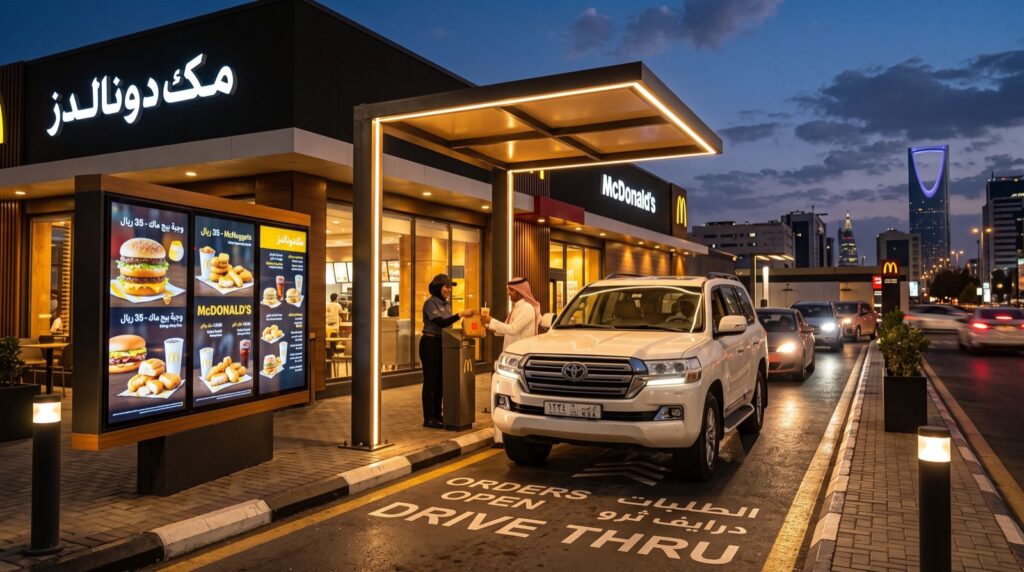
Quick-service restaurants fight the identical battle, except their queue idles in the parking lot with engines running. The fix there is audio and timing hardware rather than tokens. Operators installing an HME drive thru in pakistan get the restaurant equivalent of a QMS dashboard: every car is timed from speaker post to window, and crews compete against a target clock instead of guessing.
HME itself has spent decades building this category; the manufacturer’s own resources at HME document how timer data lifts cars-per-hour at major global chains. The lesson transfers directly to lobbies: what gets measured gets faster.
Five Mistakes Lahore Buyers Should Avoid
- Buying hardware without software support. The screens are commodities; the routing logic and reports are the product.
- Ignoring Urdu voice announcements. English-only calling confuses a large share of walk-in customers.
- Skipping UPS protection. A power flicker that wipes the active queue creates more chaos than having no system at all.
- No staff training day. Agents must actually press the next-token key; systems fail socially before they fail technically.
- Choosing a vendor with no local presence. Shortlist quality service providers who can reach your branch within a day, because a dead kiosk on Monday morning cannot wait for a support ticket to clear a foreign help desk.
Frequently Asked Questions
What does a queue management system cost in Lahore?
Entry-level single-counter setups start around PKR 250,000 in 2026, while multi-counter bank-grade systems with kiosks, displays, and analytics typically run PKR 800,000 to PKR 2.5 million. Annual software support is usually 10 to 15 percent of the license.
How long does installation take?
A standard branch is wired, configured, and staff-trained in two to four working days. Multi-branch rollouts with central reporting need a pilot branch first, then roughly one branch every few days.
Can the system handle load-shedding?
Yes, if specified correctly. The controller PC and kiosk should sit on the branch UPS, and good software resumes the exact queue state after any reboot.
Does a small clinic really need one?
If patients regularly stand because chairs run out, yes. Even a basic two-category system removes reception arguments and lets the doctor’s assistant see real patient-per-hour numbers.
Conclusion: Order Is a Competitive Advantage
Customers in this city have choices, and they remember which branch respected their time. Investing in a queue management system in Lahore turns your lobby from a stress test into a controlled, measurable process, and the reporting alone usually justifies the price. Request a live demo at your busiest branch this month and watch what a token and a screen do to the noise level.